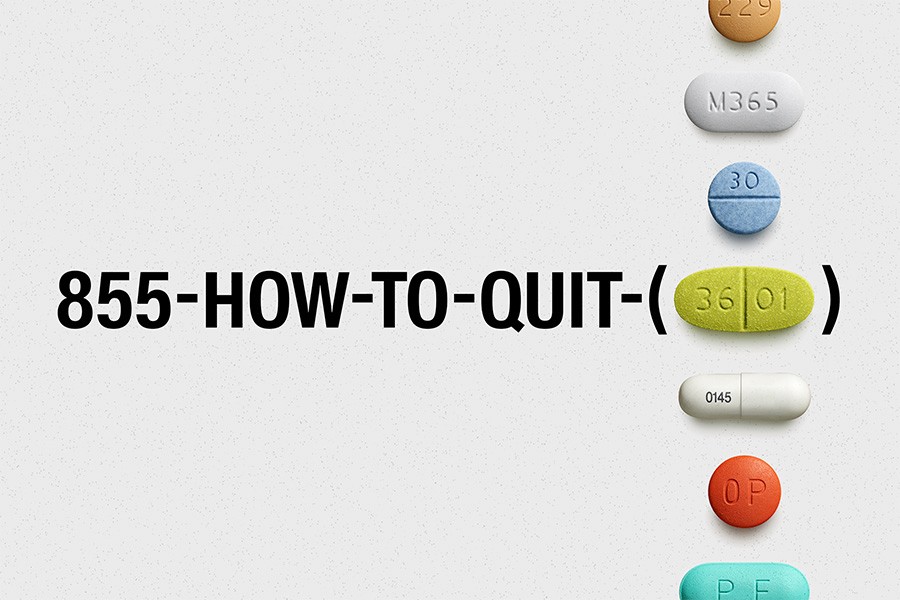
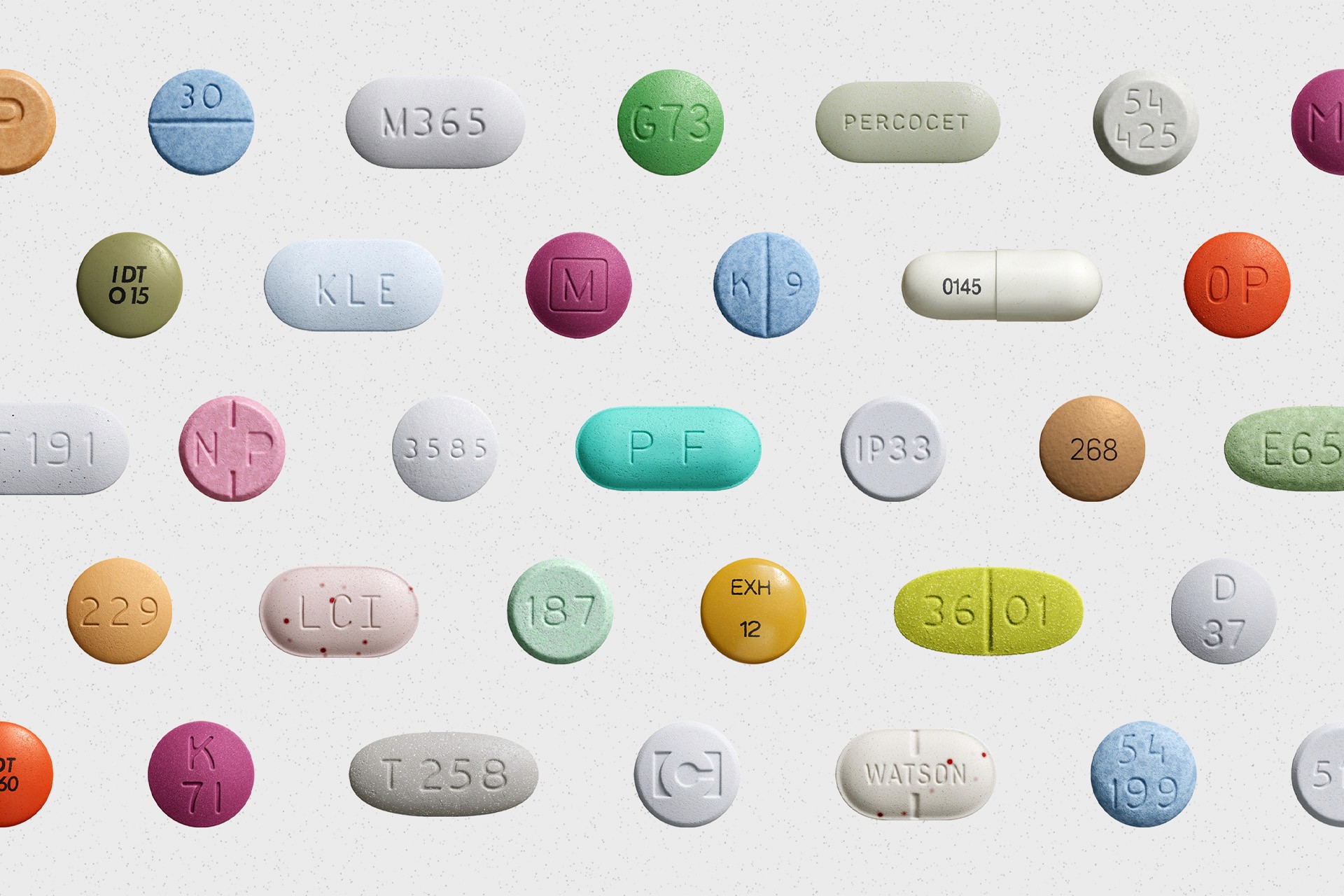
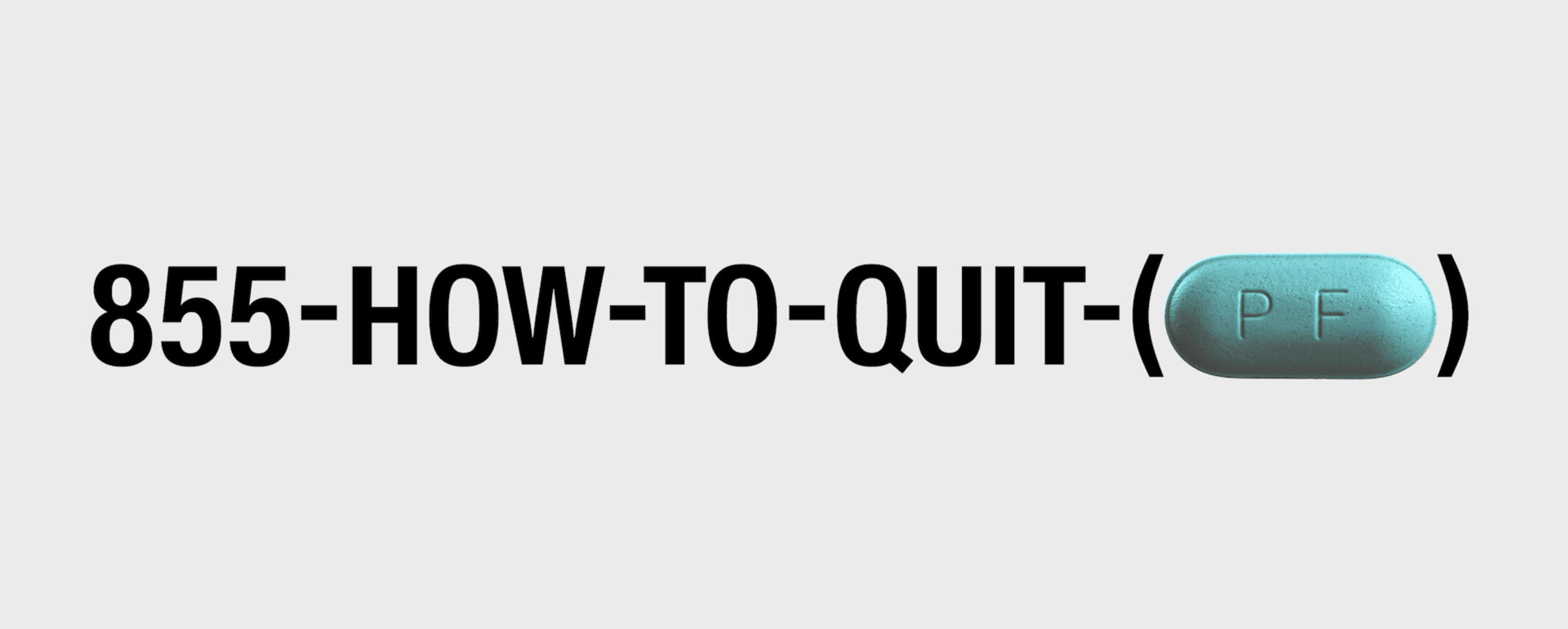
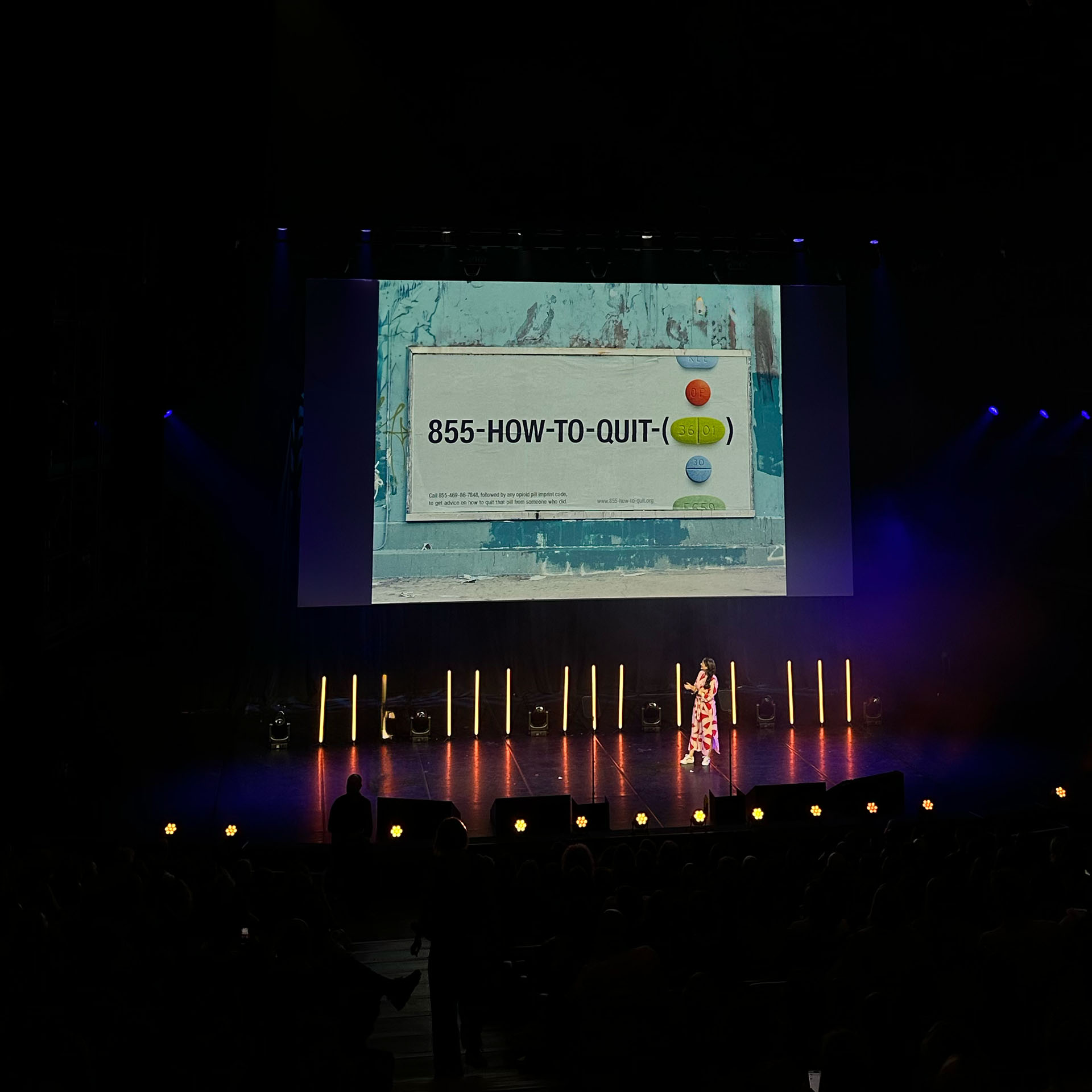
Every 6 minutes, someone in the US dies from opioid overdose. 855-HOW-TO-QUIT is a toll-free helpline intended to reach people in the most critical moment – when they have a pill in their hand. Each pill comes with a unique identifier imprinted, such as OP for oxycodone, IP33 for codeine, or C for fentanyl. The helpline transforms these imprint codes into phone extensions, connecting those who struggle with addiction with those who managed to quit that very pill.
Client
Anzen Health
Year
2024
Role
Concept, art direction, design concept, strategy, project management, outreach, pitch development, sourcing, client communication, PR, experience design, identity design, digital design, UX/UI, audio production, photo & video production, print production, digital production
Links
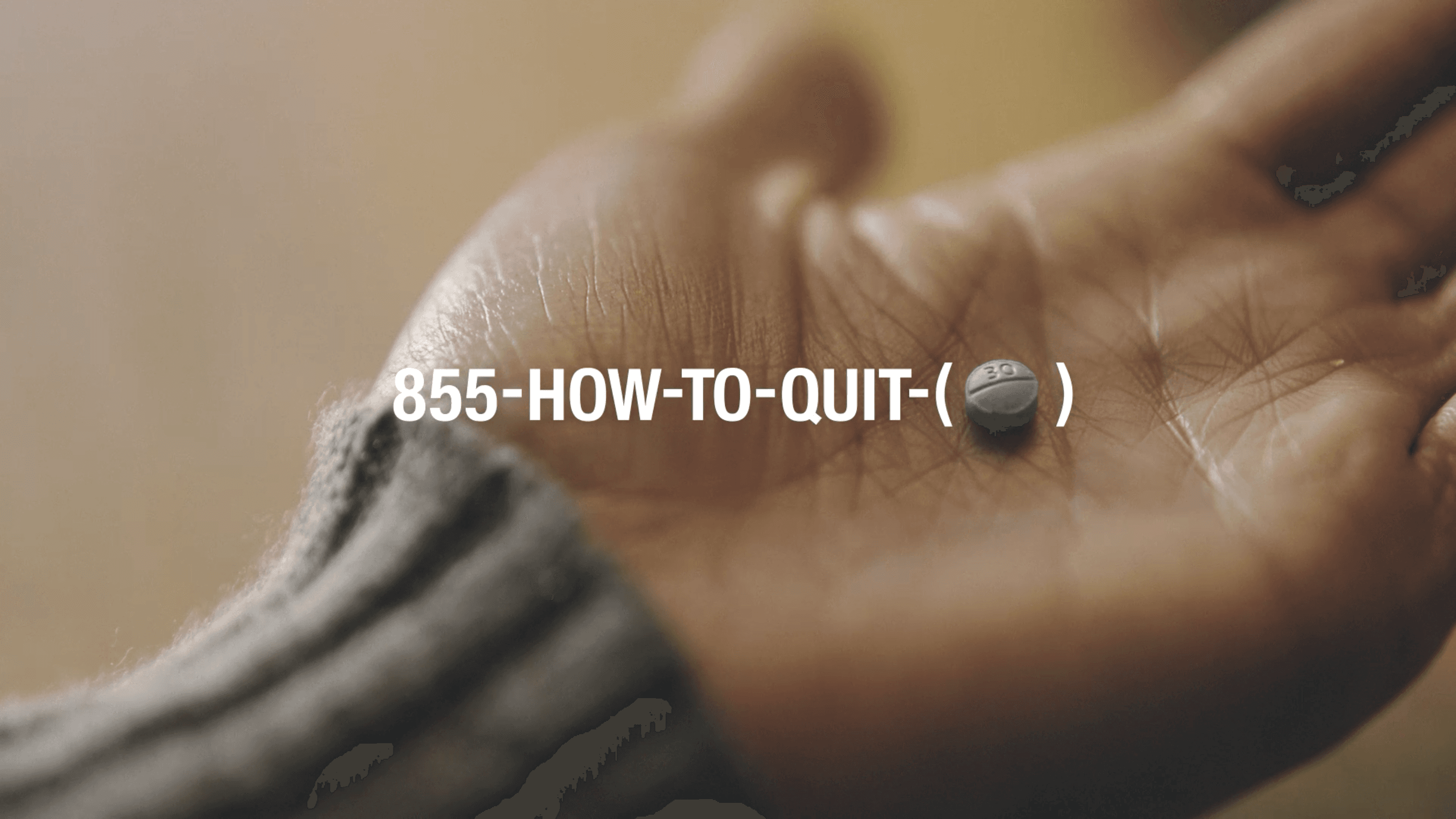
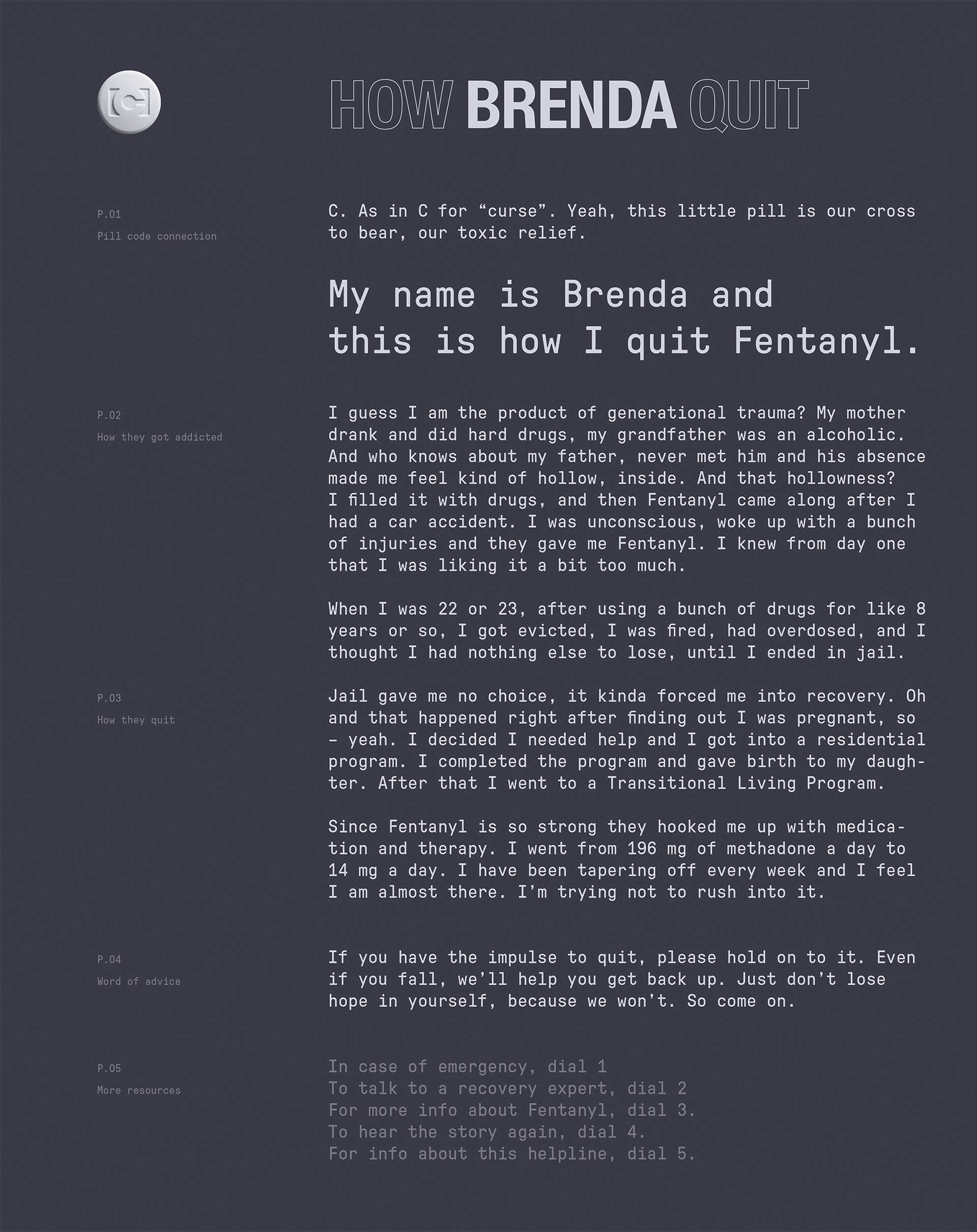
The helpline features 30 survivors talking about their experience with one of the 30 most prescribed pills. Live whenever their availability allows, pre-recorded for 24/7 service. A general recorded story covers misdials and pills not yet included, as new pills are continuously added. Callers can also get more information on the pills and the project, as well as talk to experts for professional live support.
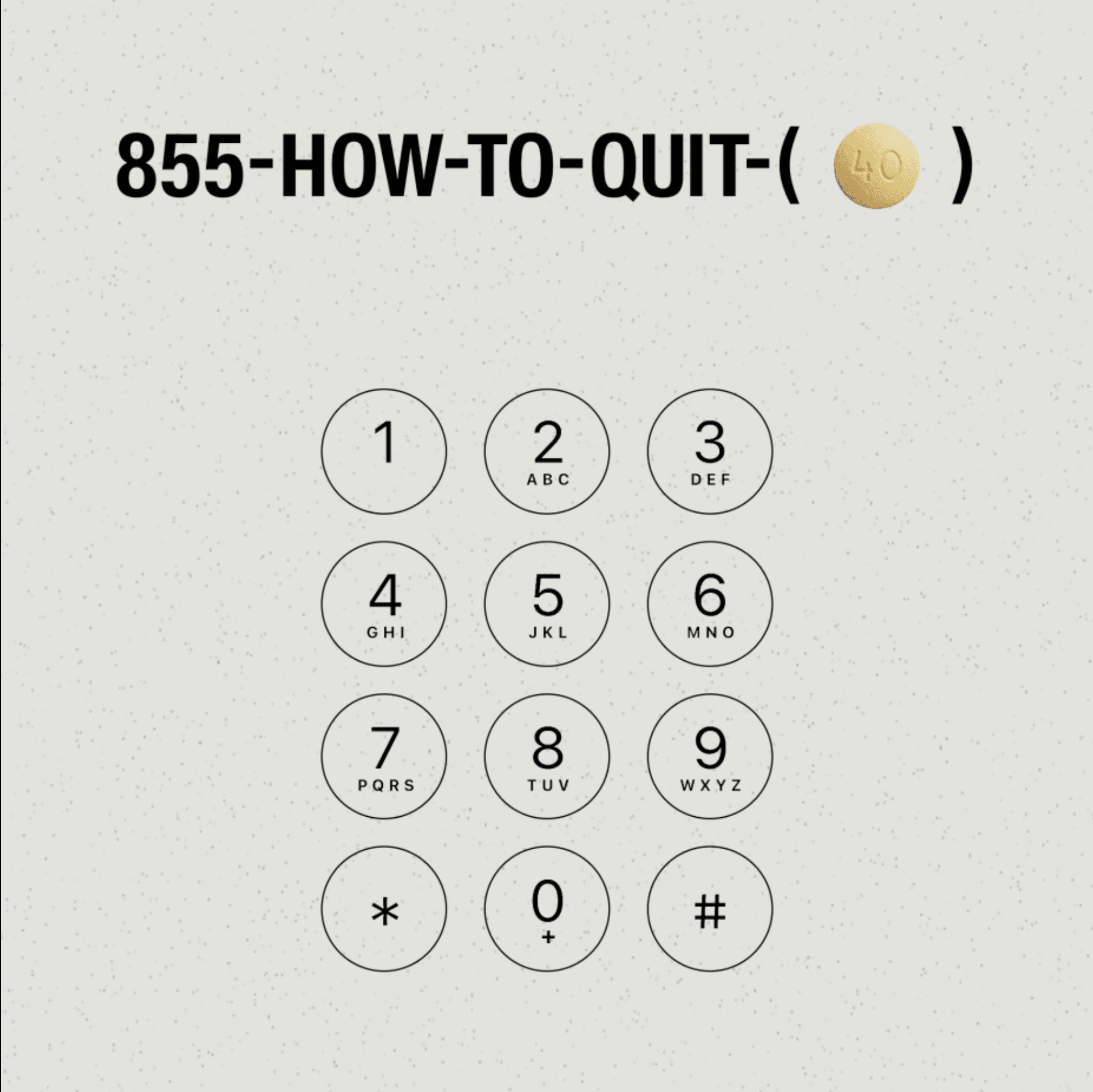


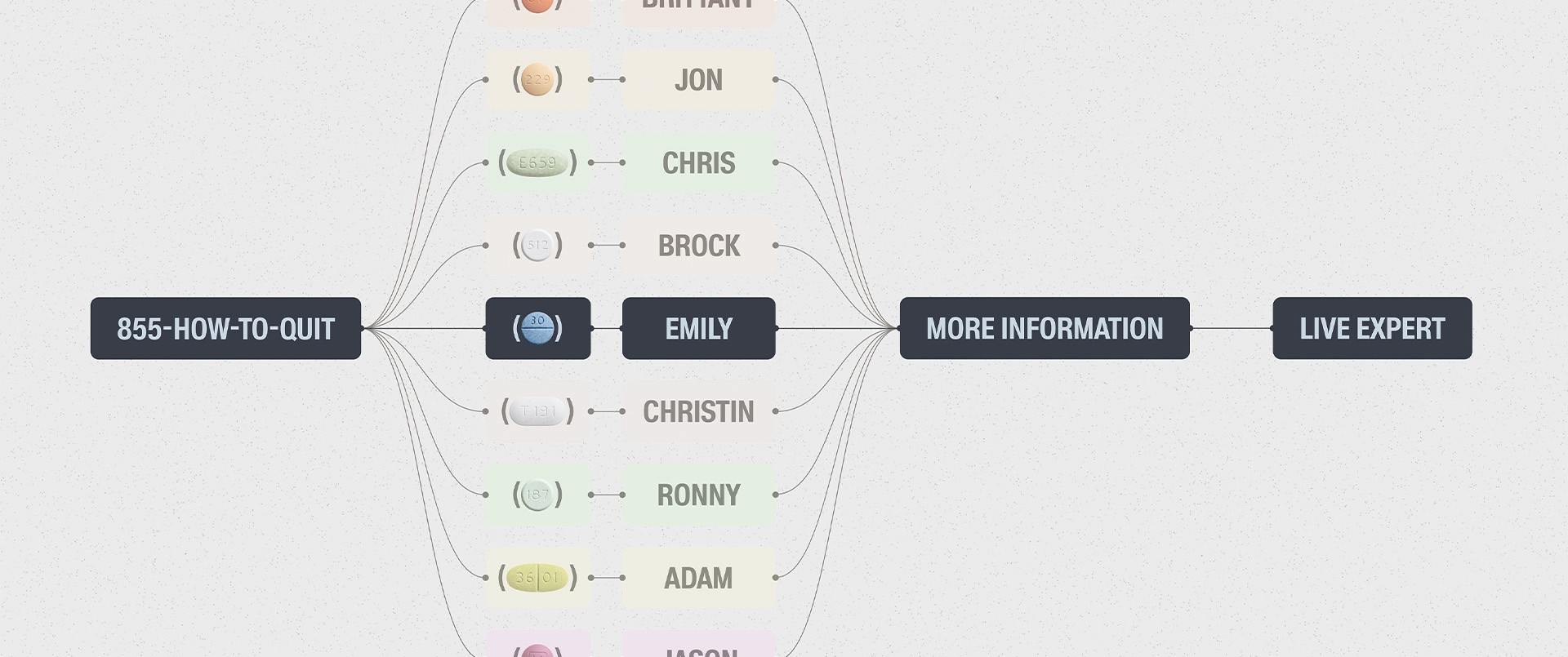
Beyond live support, the helpline offers over two hours of recorded stories, curated with experts to reflect the diverse realities of addiction. Each story begins with a reflection on a pill imprint code to create an emotional connection, then goes into detail about one of many different treatment options. Callers can receive more information or speak with experts for professional support.
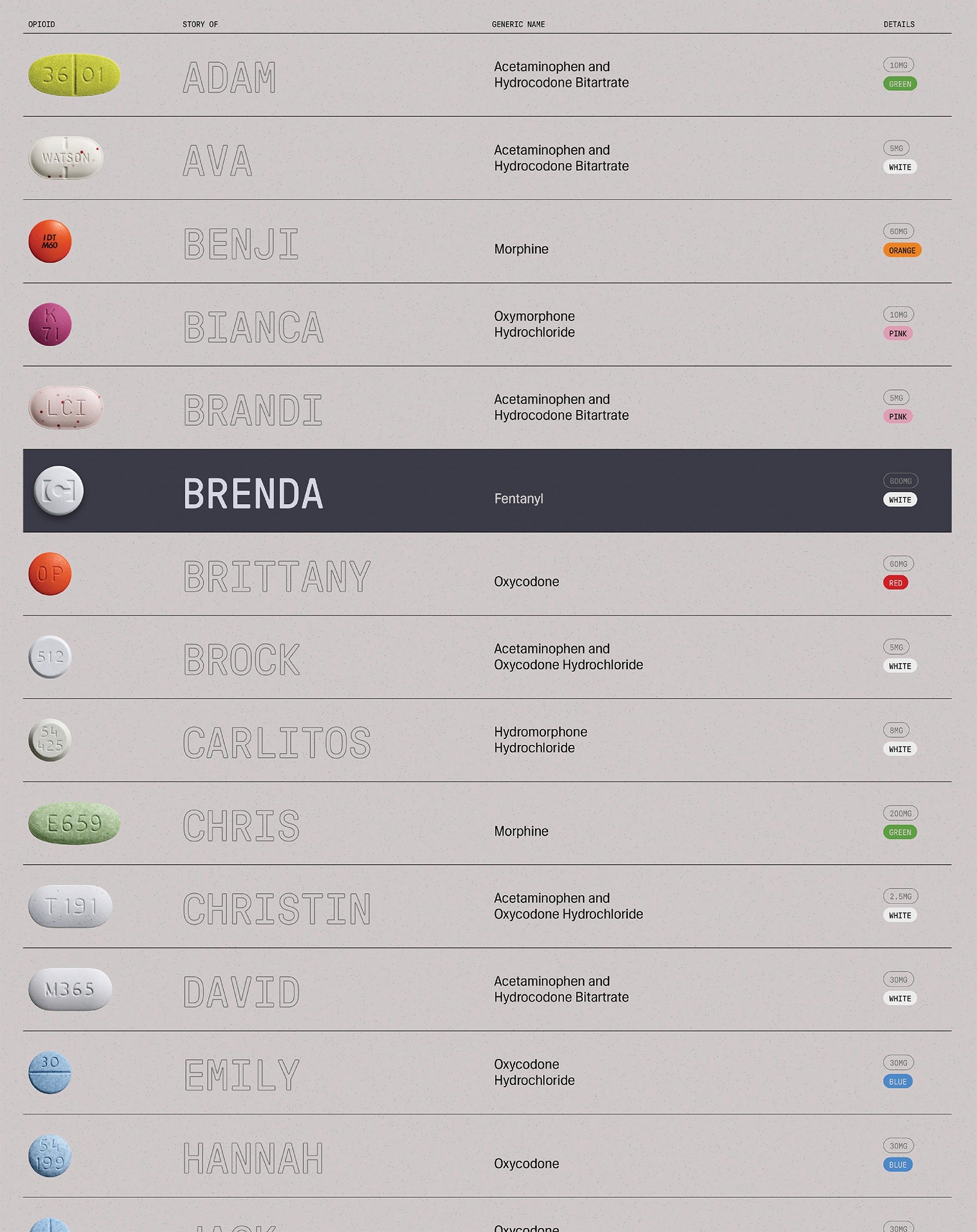

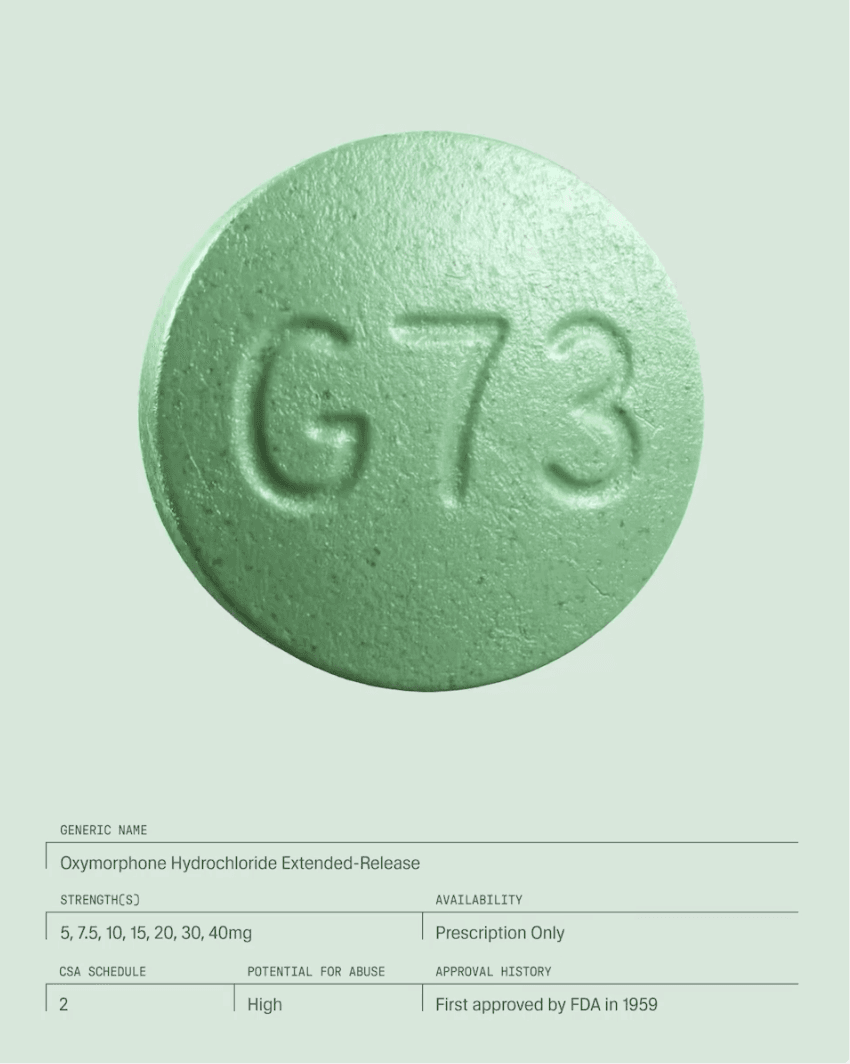
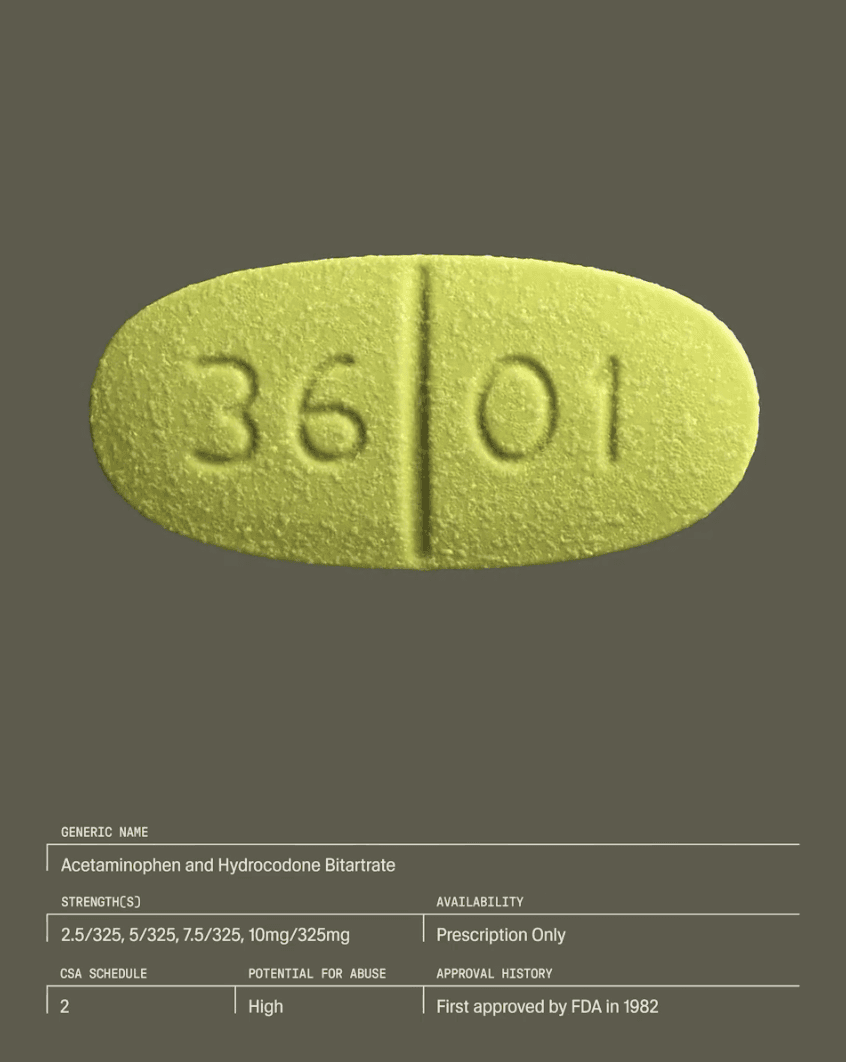
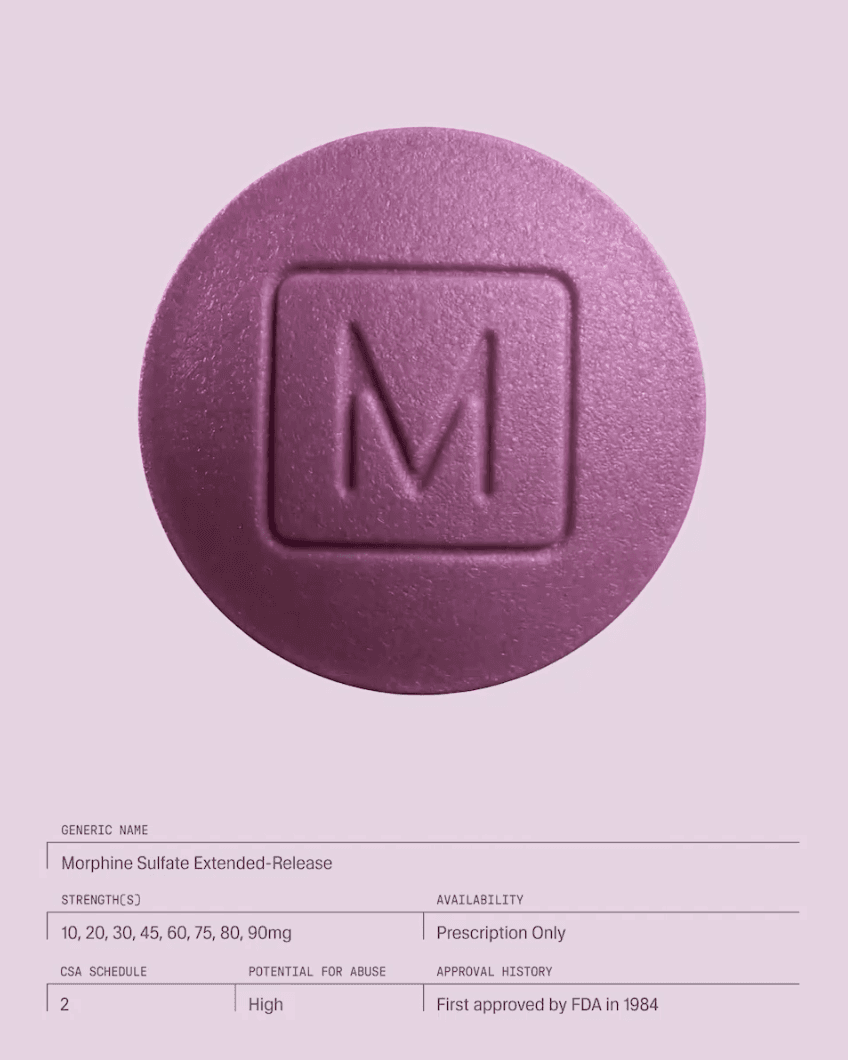
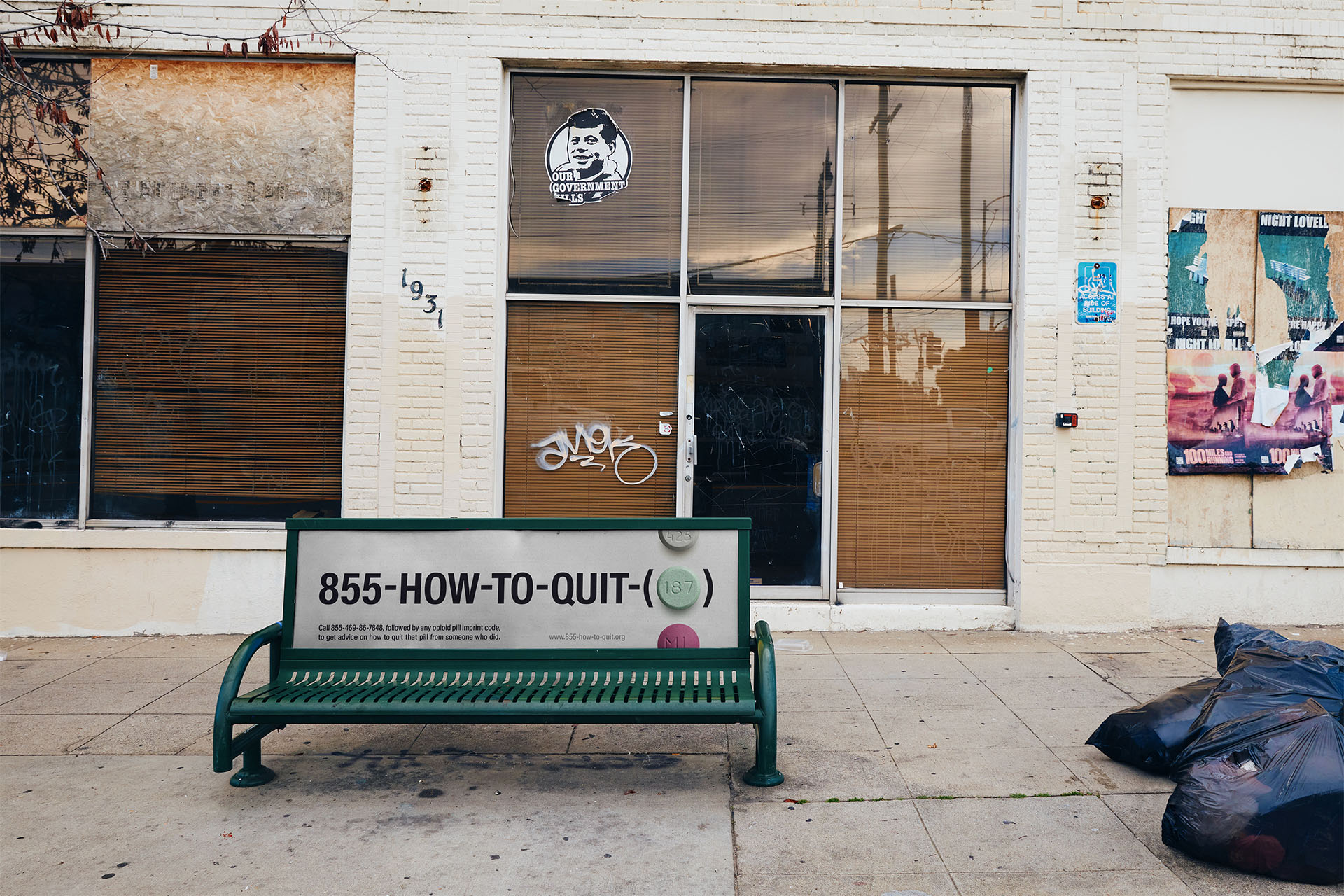
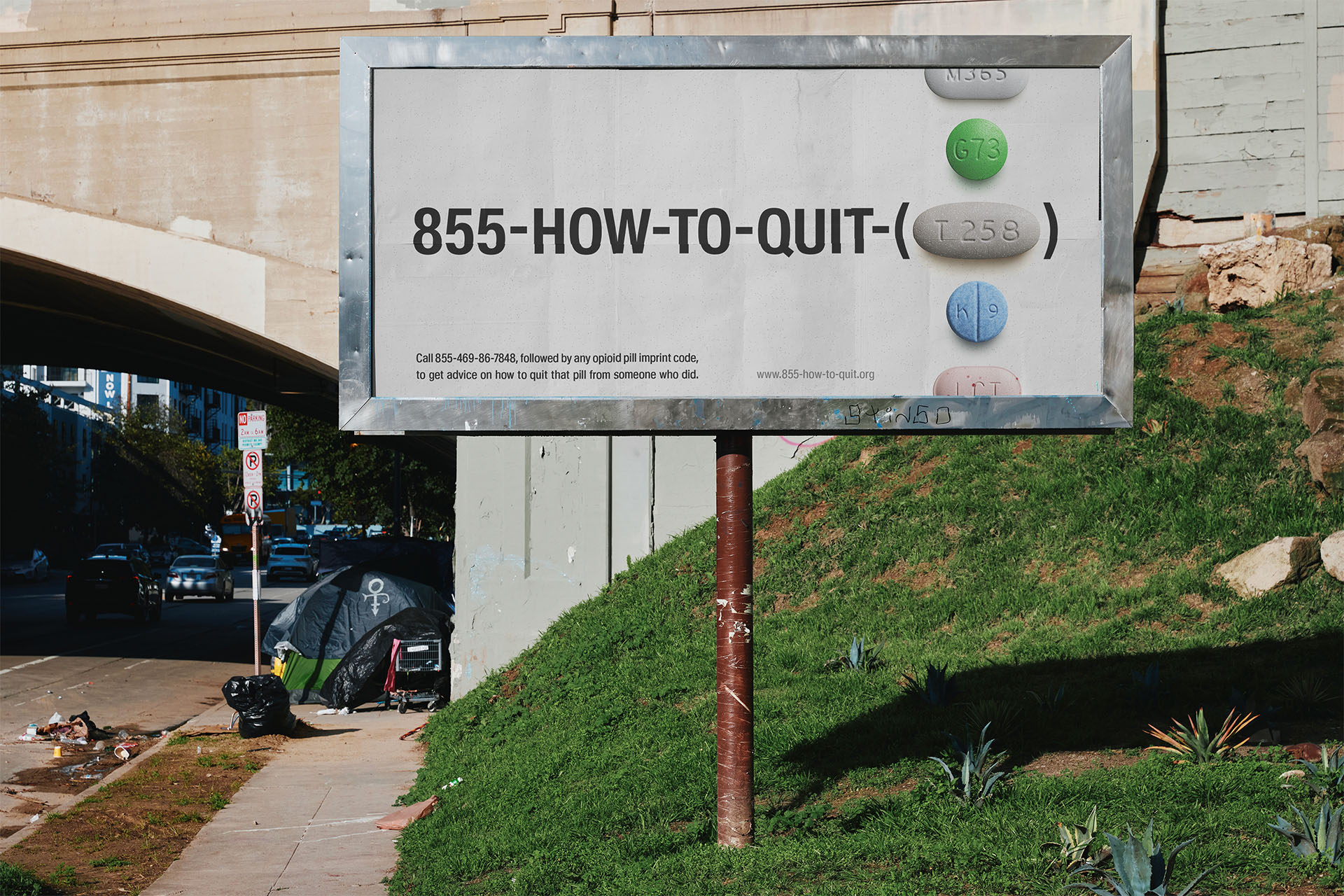
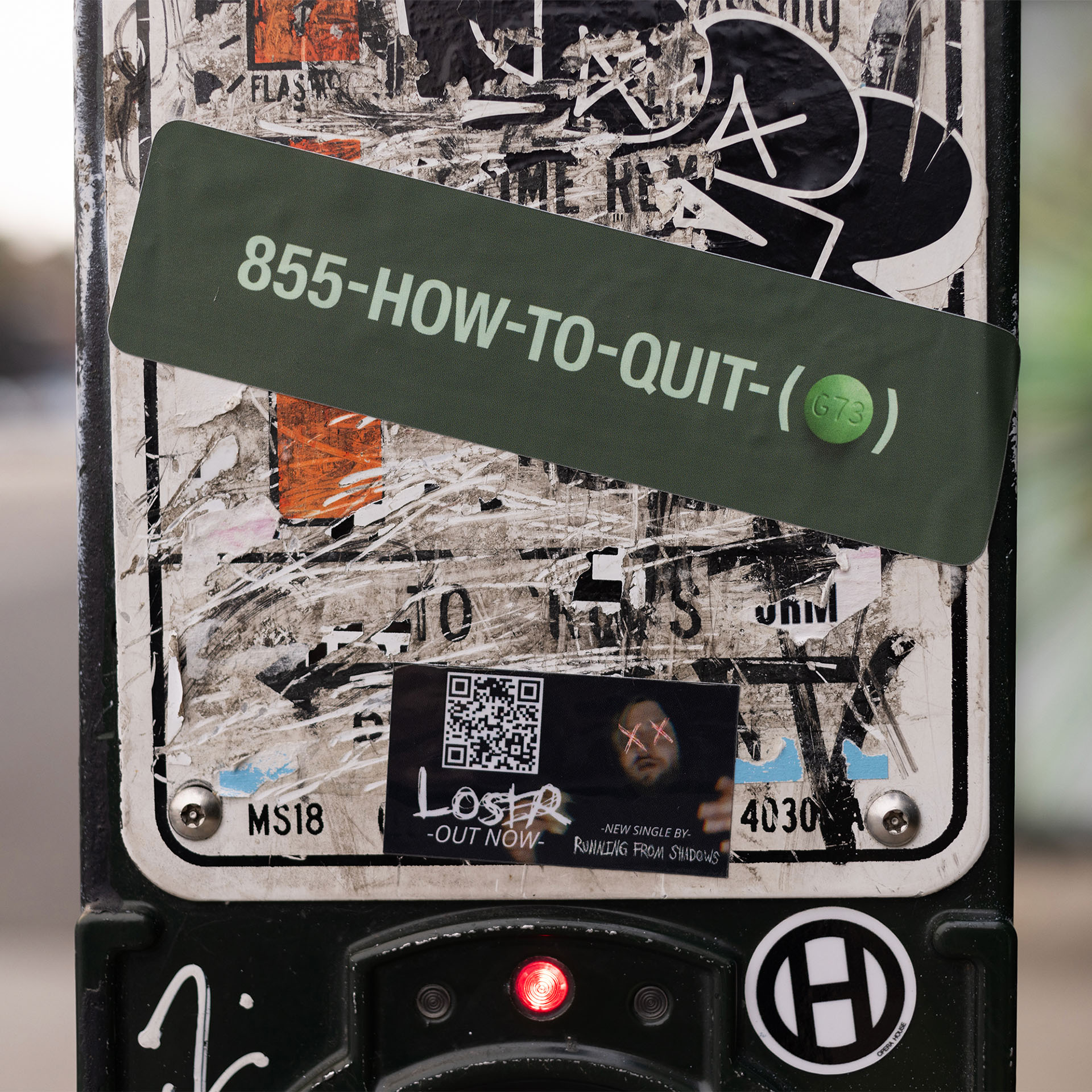
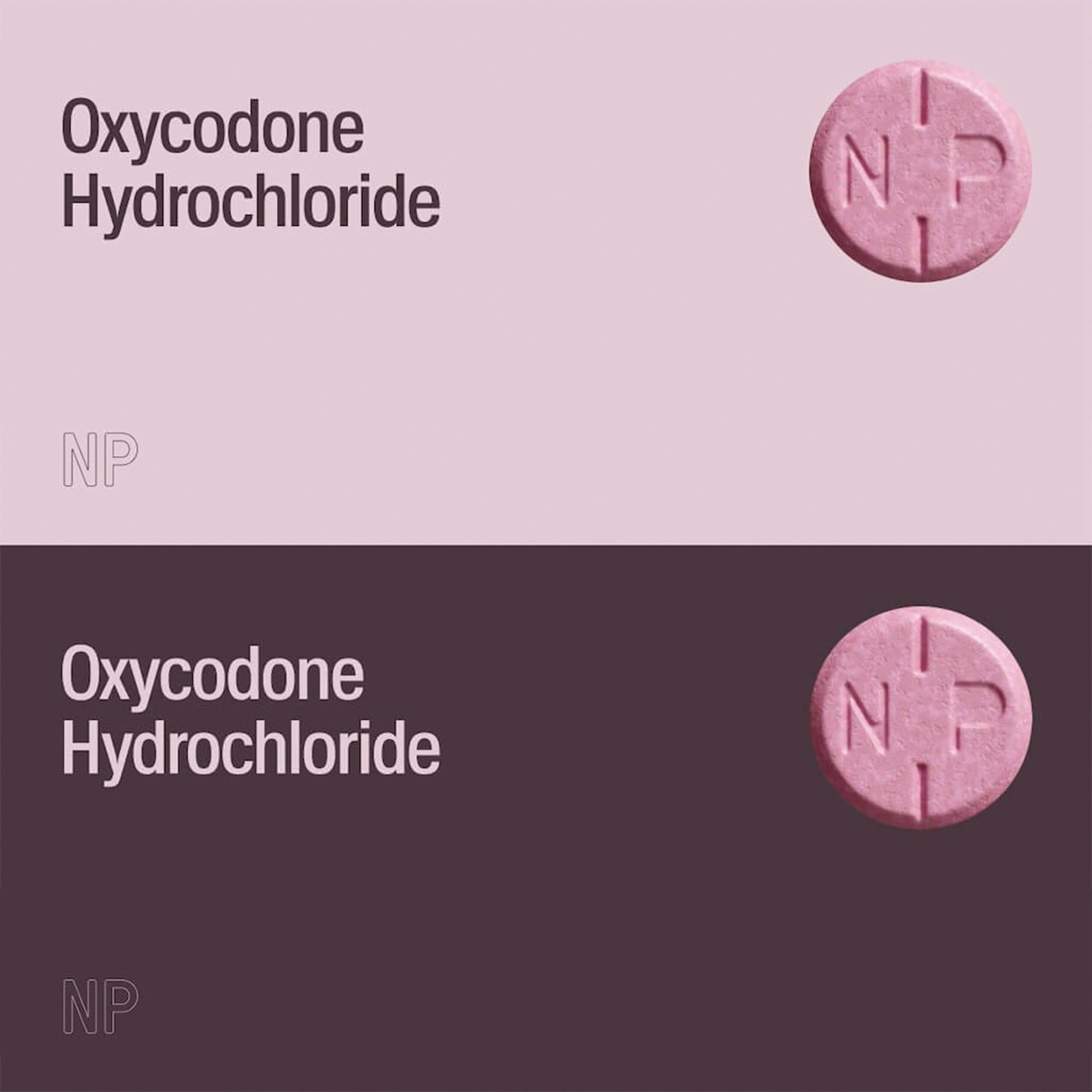
The visual concept of the campaign was intentionally kept simple. It leveraged the insight that the target group was likely familiar with the appearance of the pills, so together with CGI artist Roman Tikhov, over 30 of the most common opioid pills were carefully crafted in 3D. From there, the different pills were paired with the actual helpline number, creating a direct call to action. The simple visual concept was then adapted across various mediums ranging from small stickers, social media, the website, print ads and large-scale out of home placements.
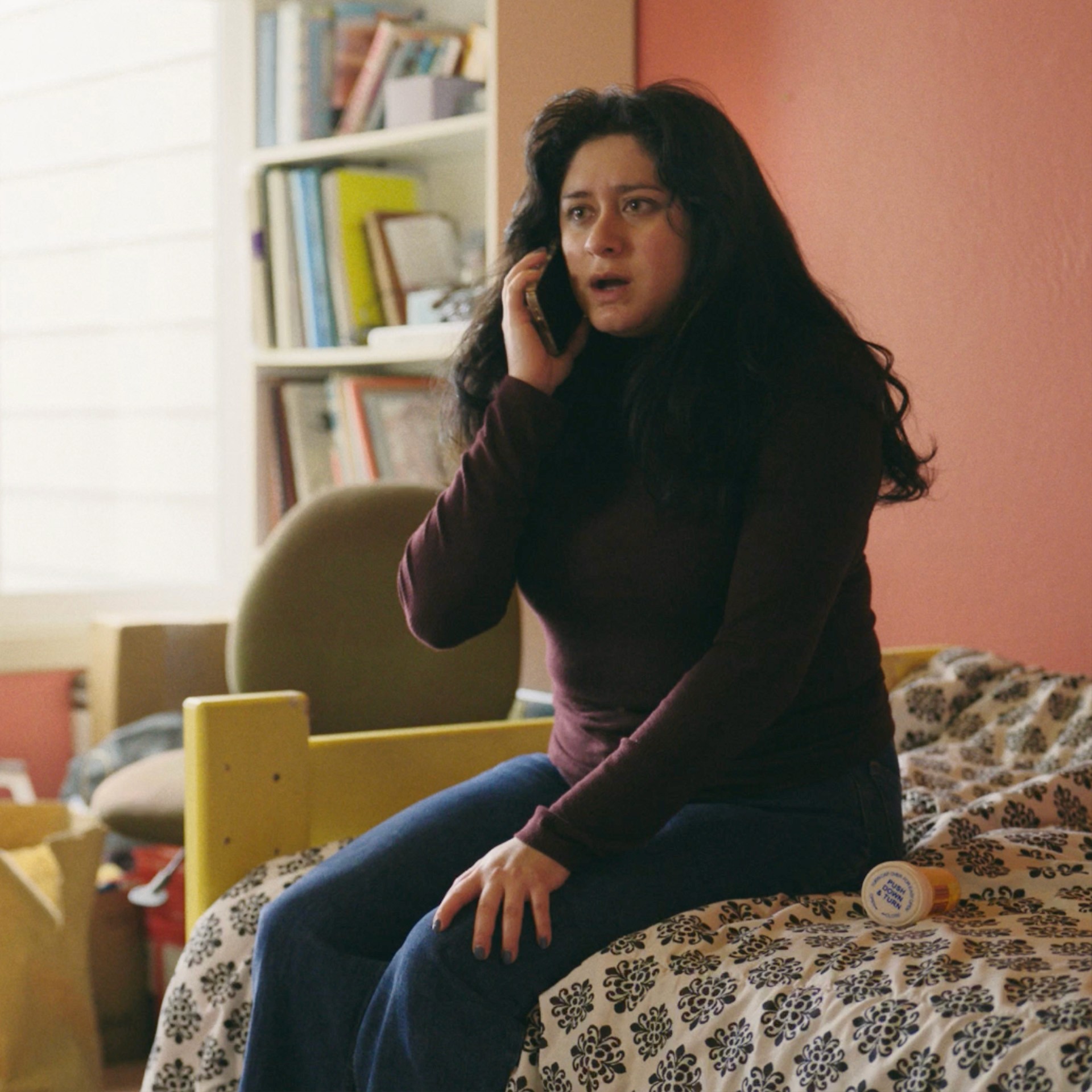
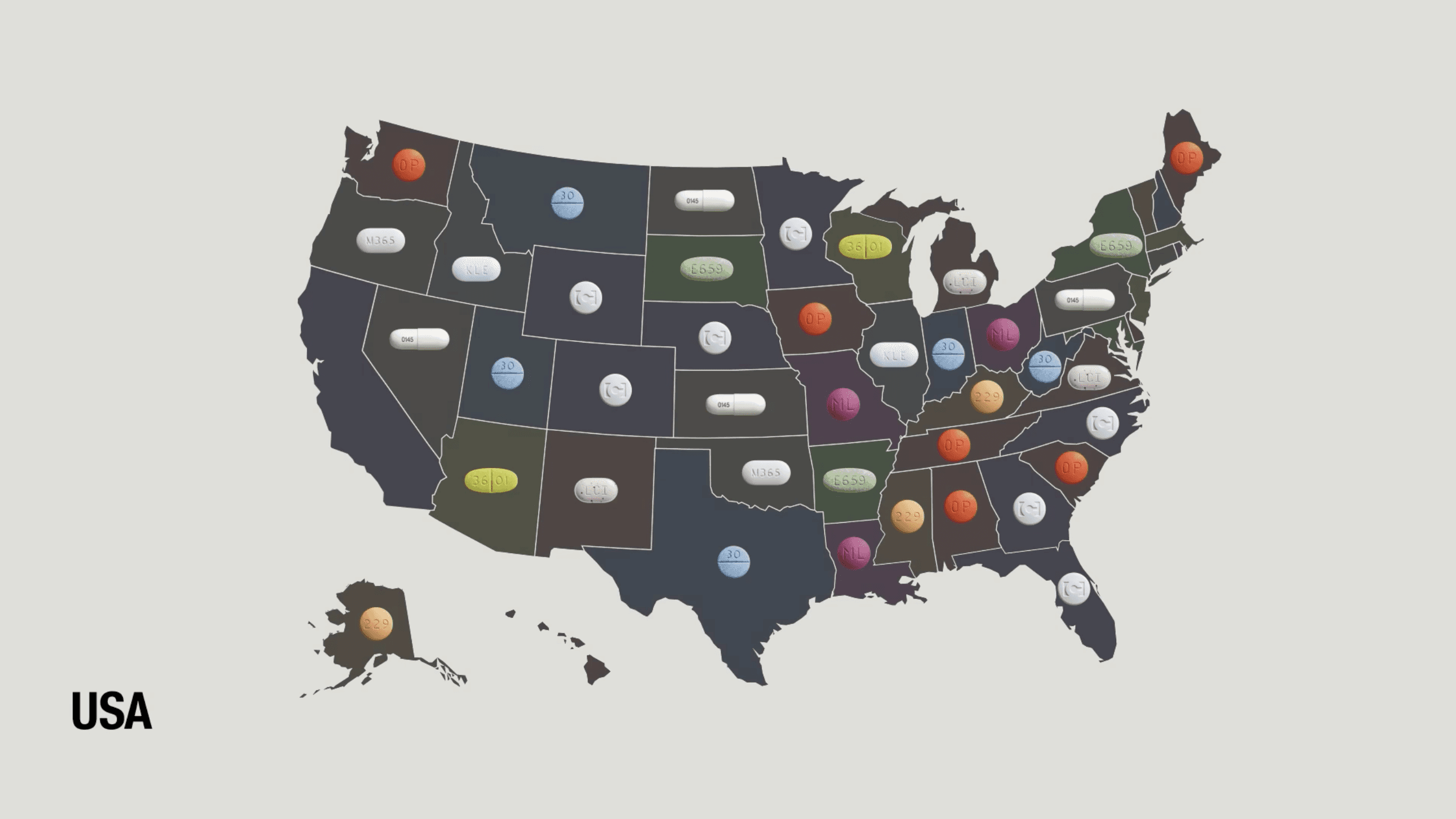
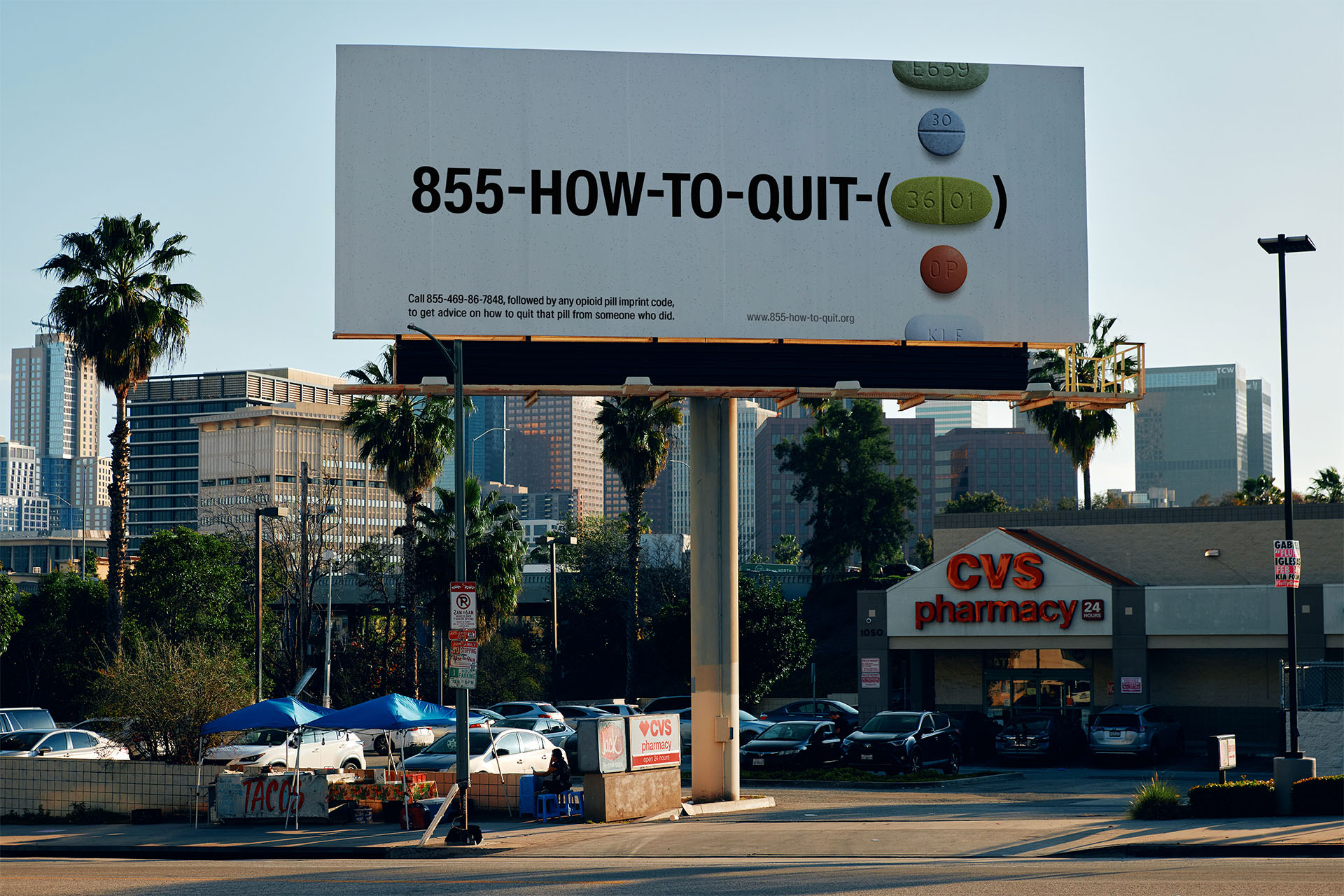
The media placements might have been visually simple, but they were strategically complex. Local prescription data was used to customize all communications to feature the most frequently used pill in that area. OOH ads were placed in contextually relevant spots, like near pharmacies and known meeting spots of people struggling with addiction. An emotional film brought the campaign to TV. On social media, influencers known to have quit opioids promoted the helpline to their millions of followers.
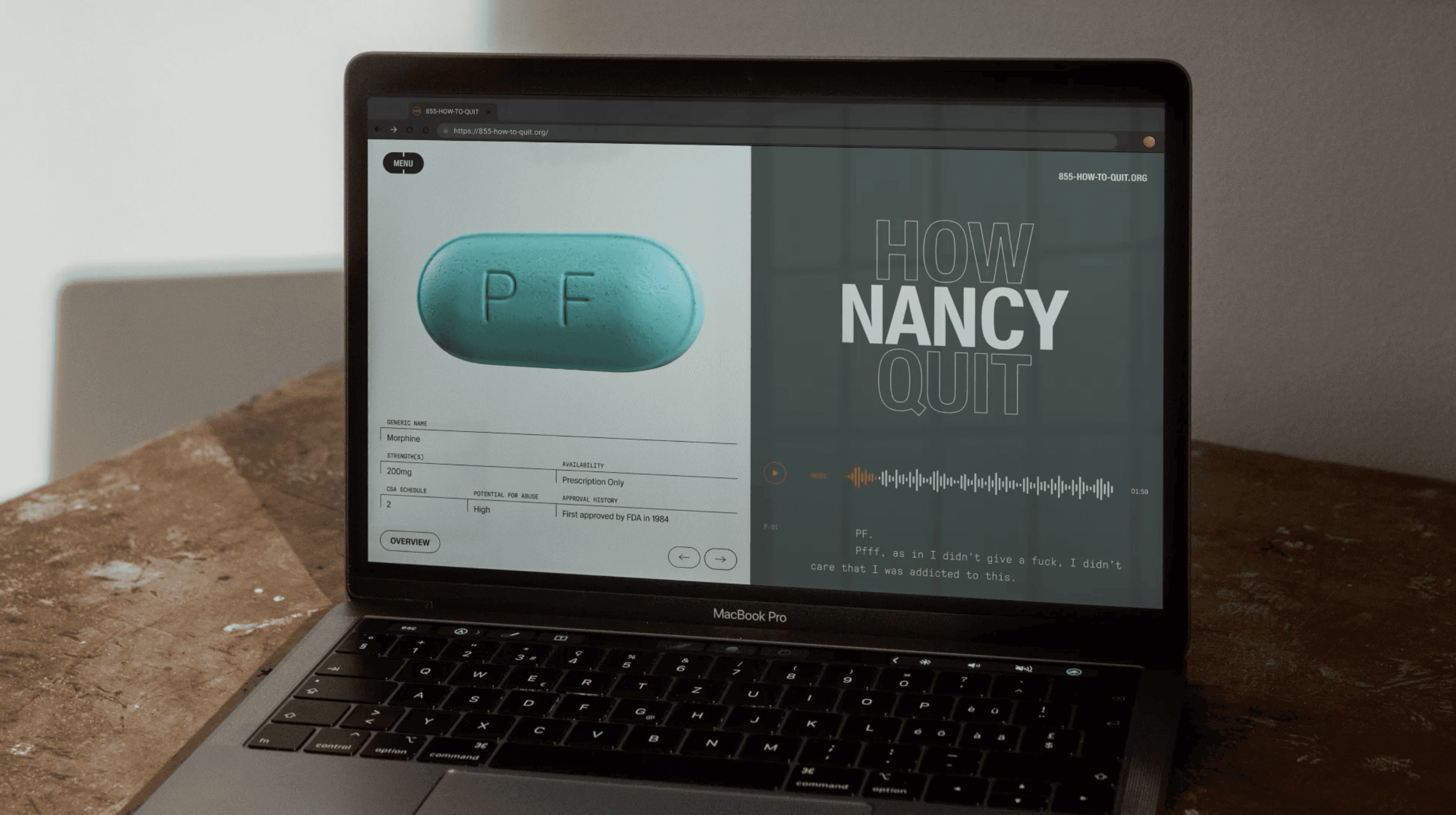
The website 855-how-to-quit.org works as the campaign hub. It features recordings of all 30 stories along with transcripts, interactive editorial content, extensive resources, as well as various ways to support the initiative, by advocating, volunteering, or even sharing your own story.
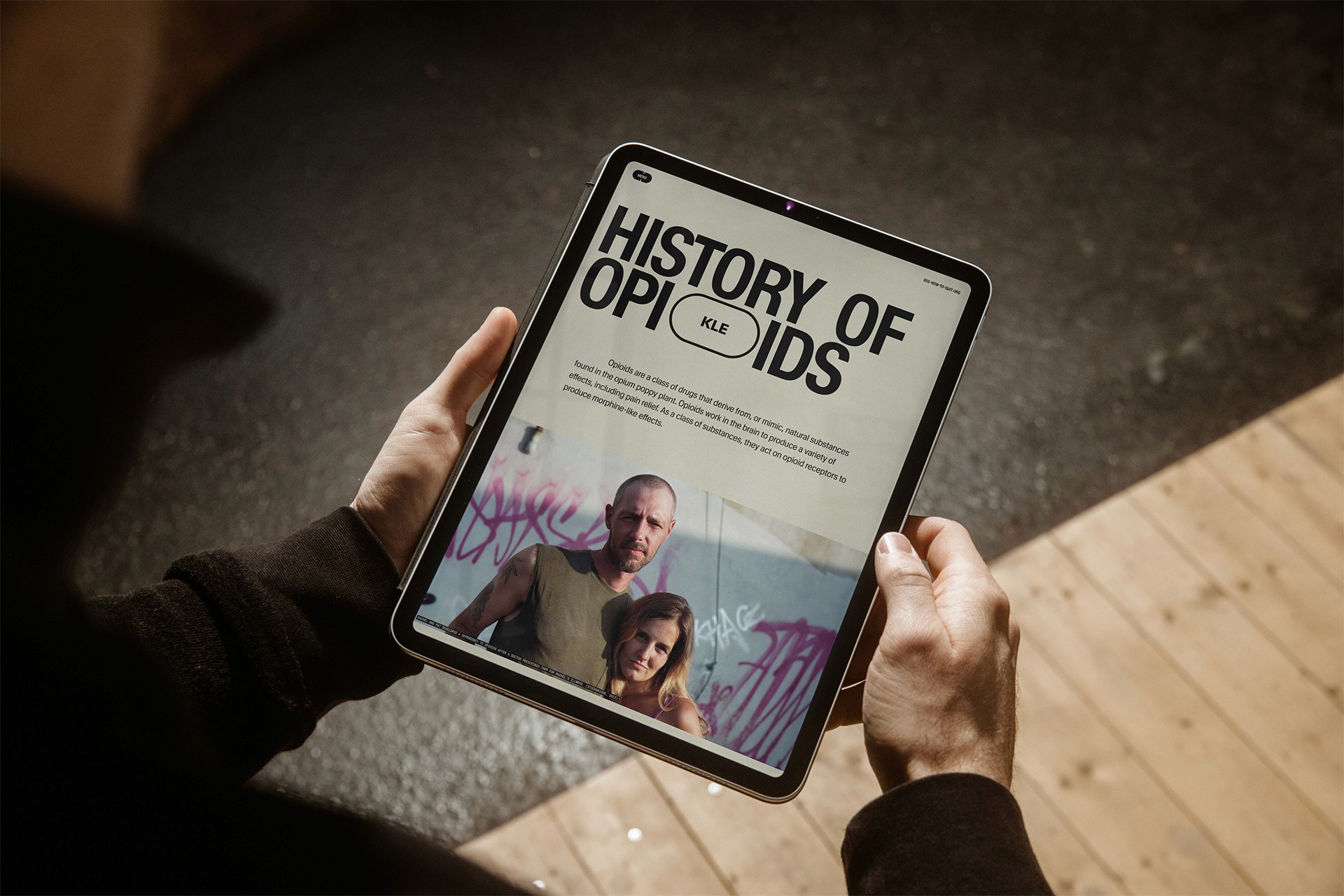
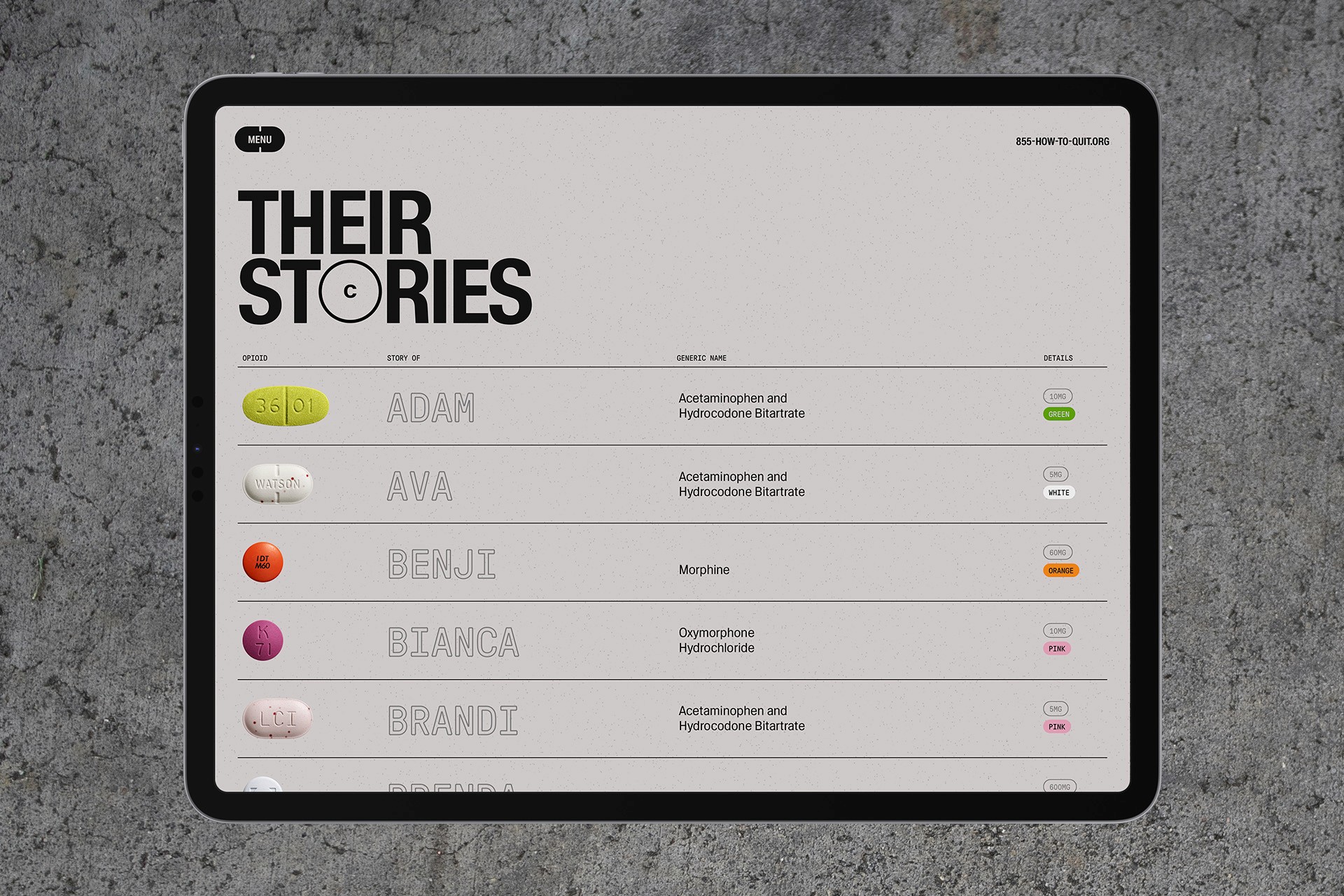
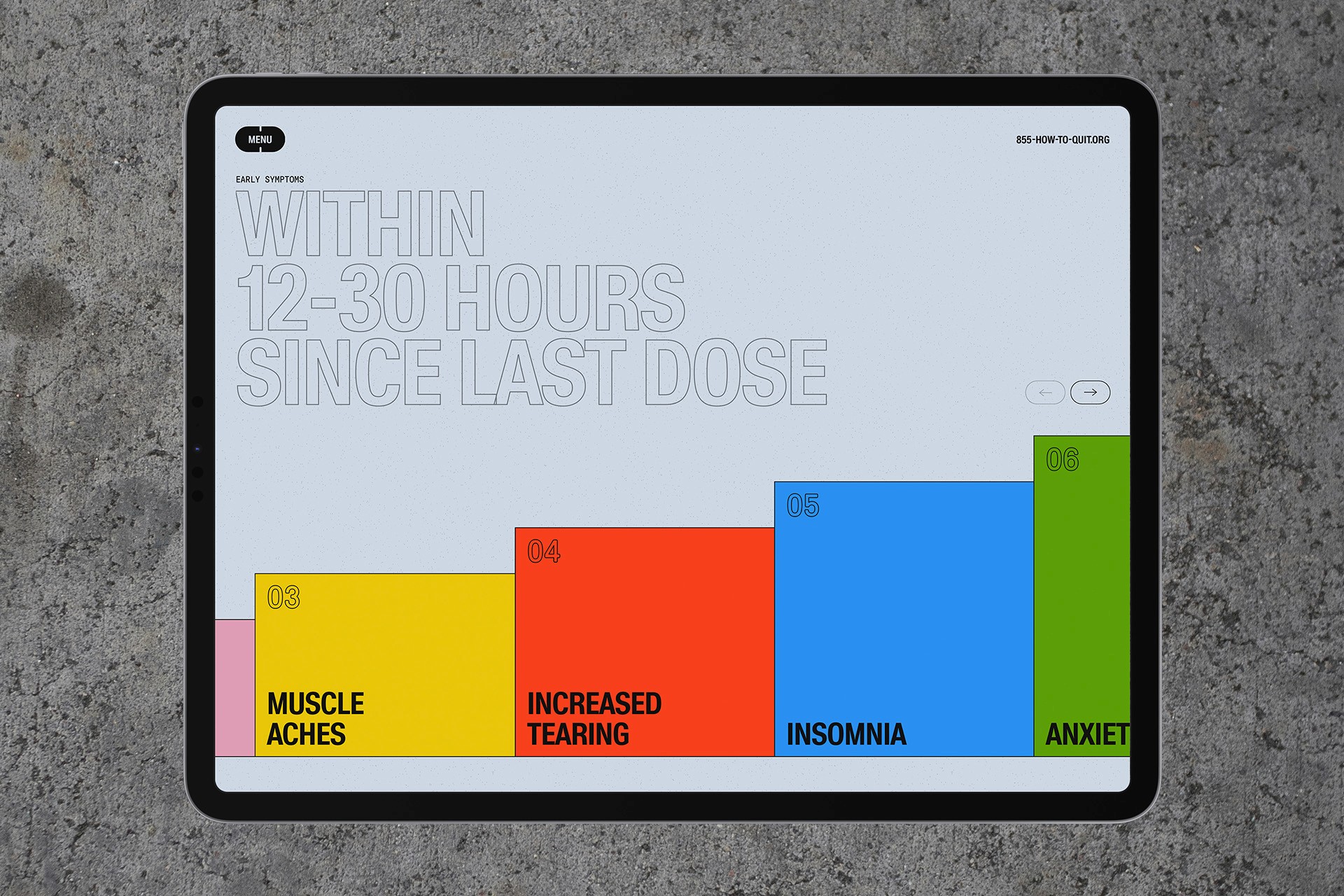
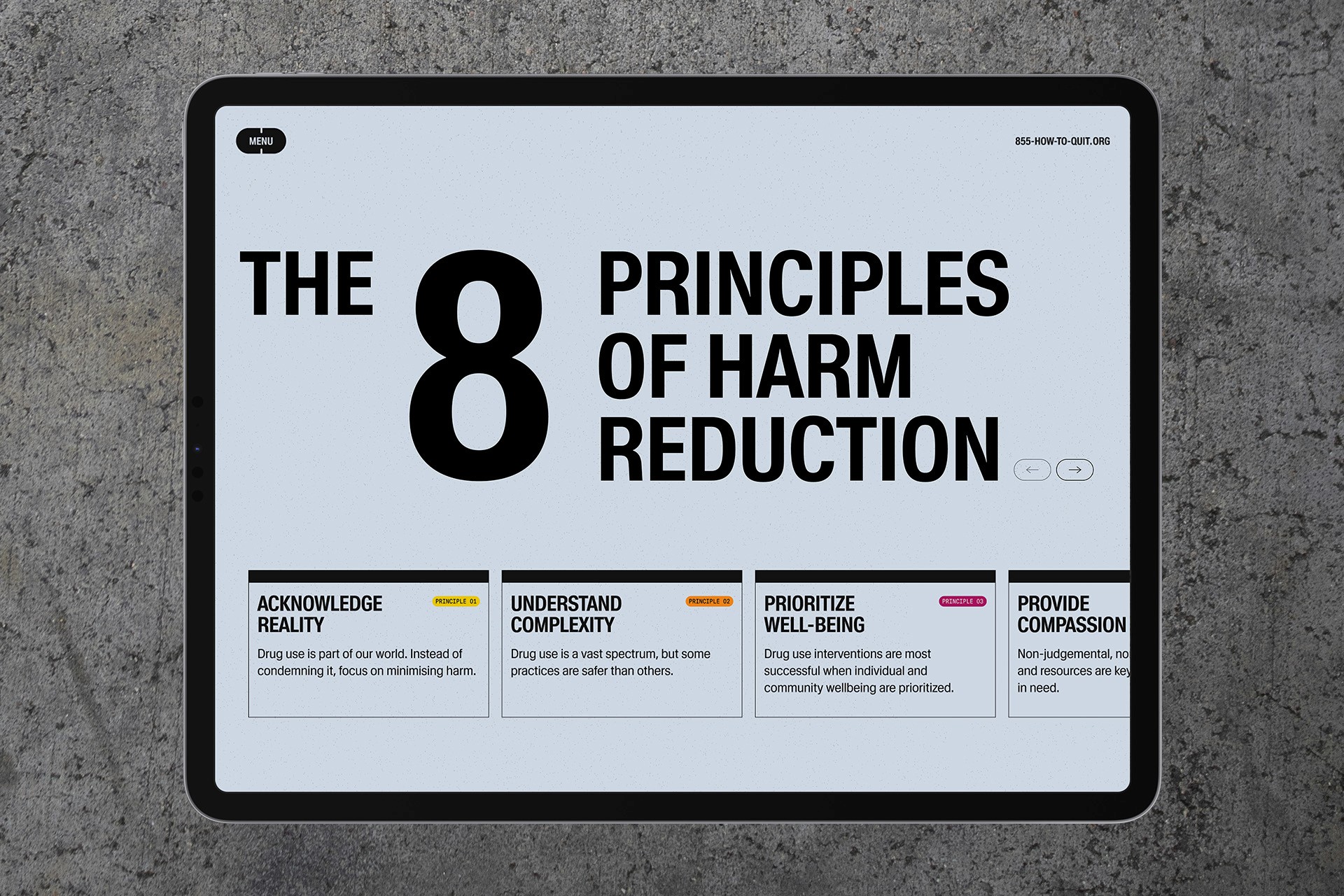
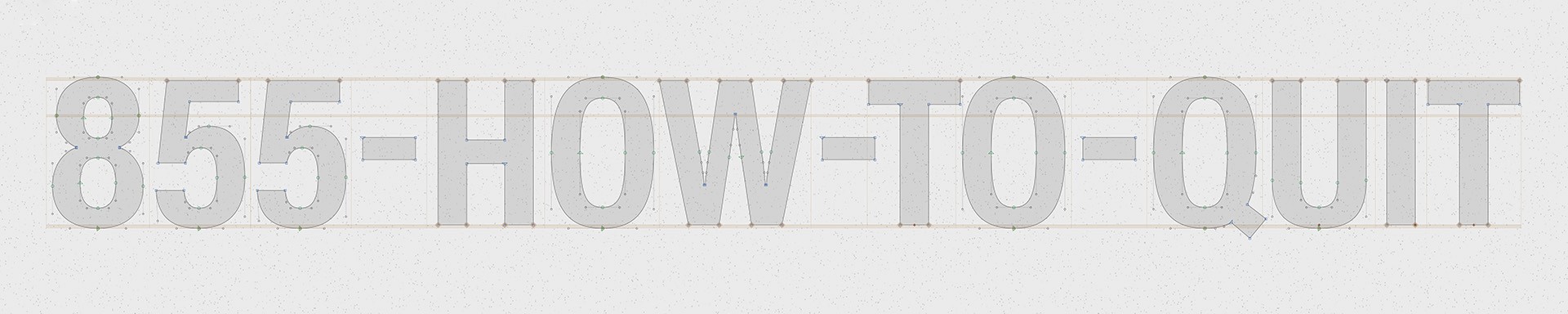
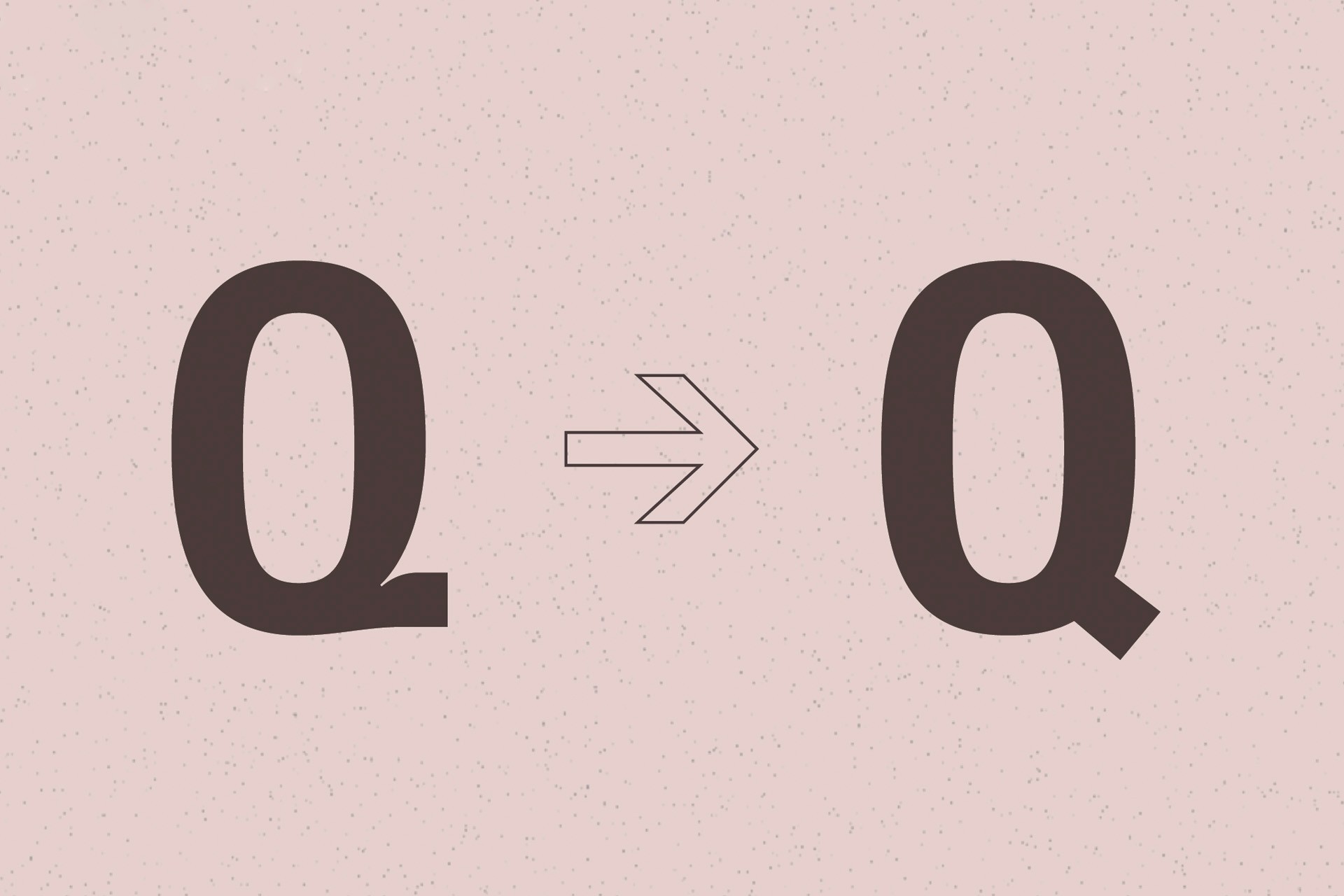
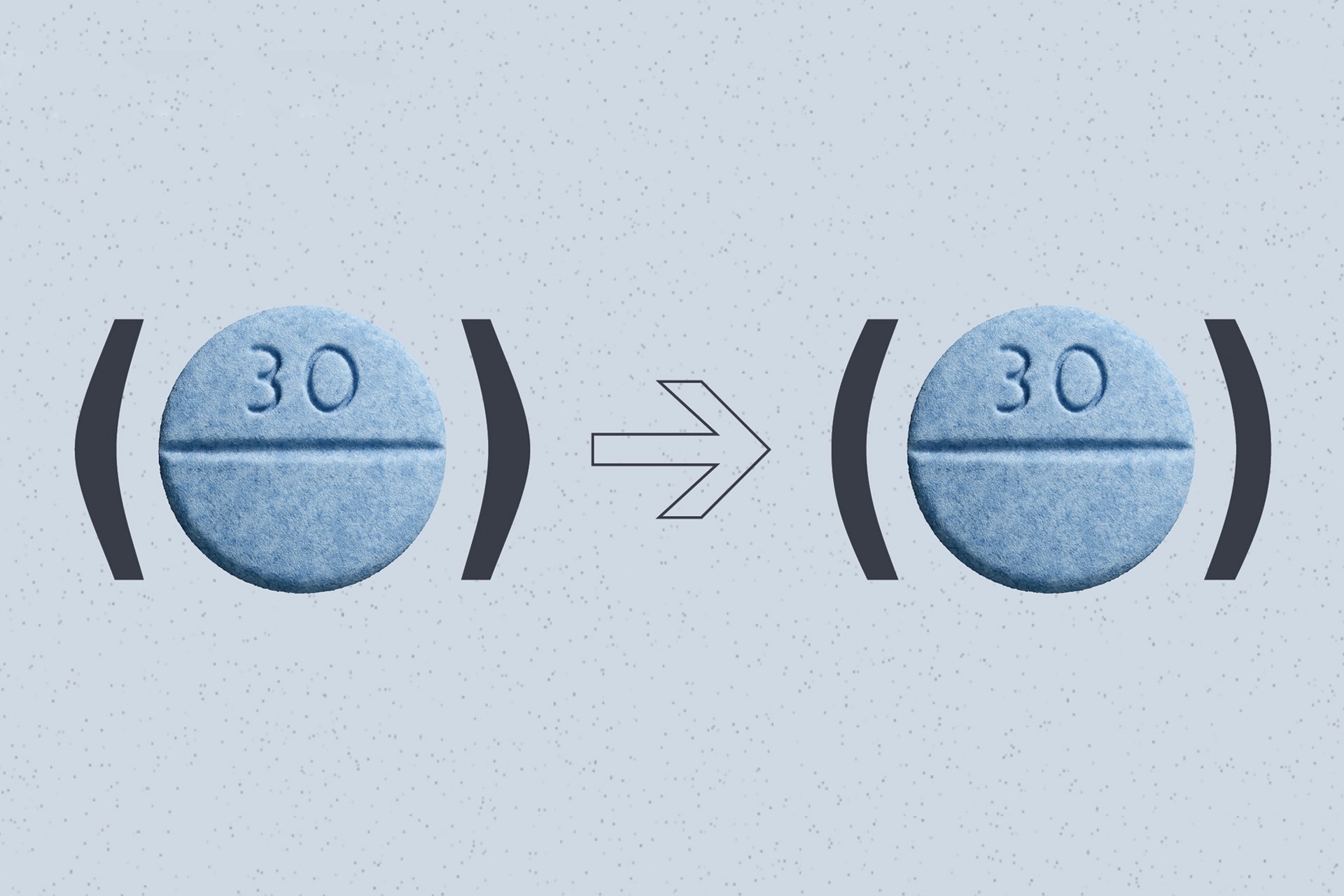
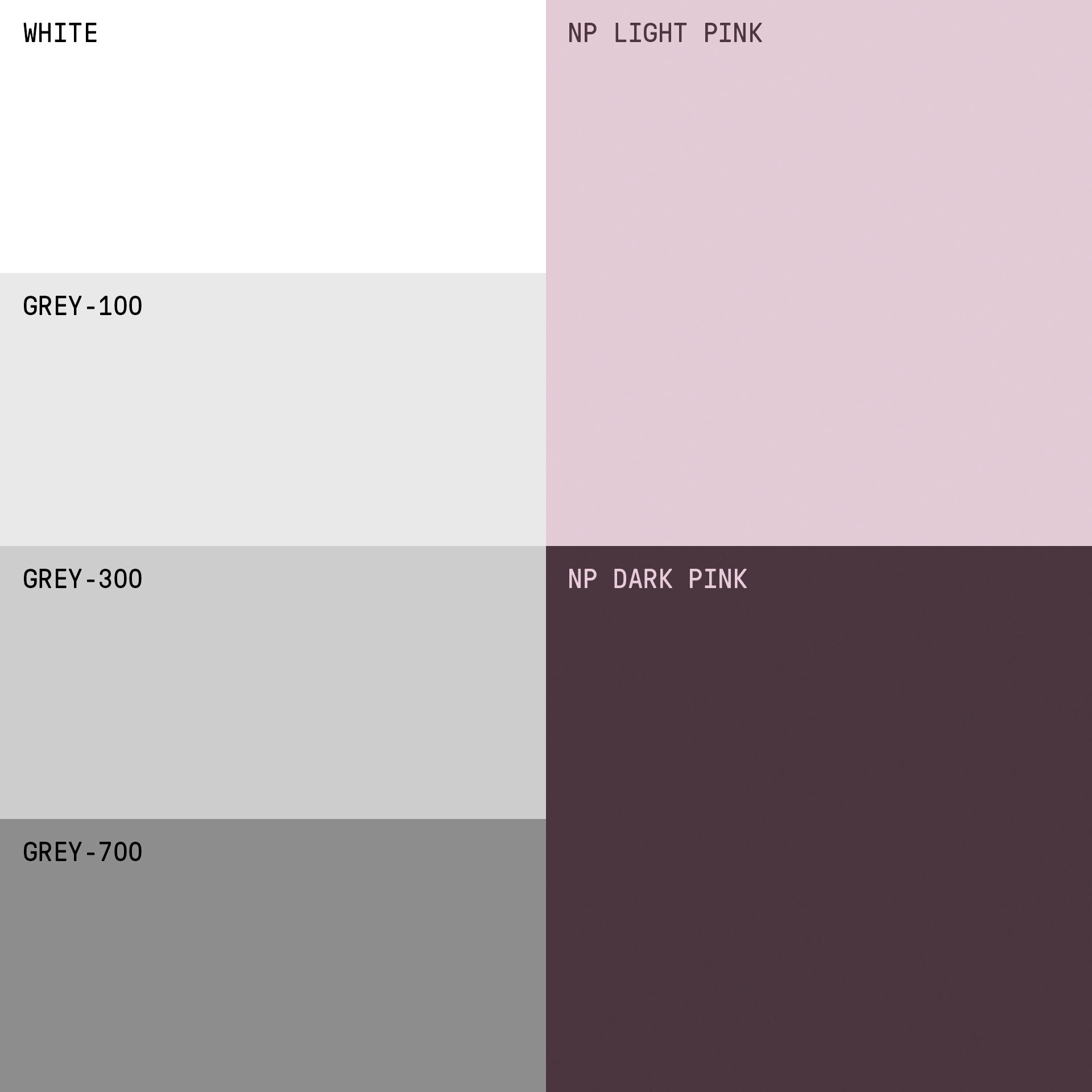
To tie the whole visual identity together, contemporary typeface Waldenburg was chosen and customized, for its strong humanist character and geometrical style inspired by pharma design. Its extreme x-height is ideal for legibility and maximizes compatibility for different media, especially for OOH seen from afar. Custom ligatures were designed to integrate the pills into the design seamlessly with a complementing color palette for each and every pill.
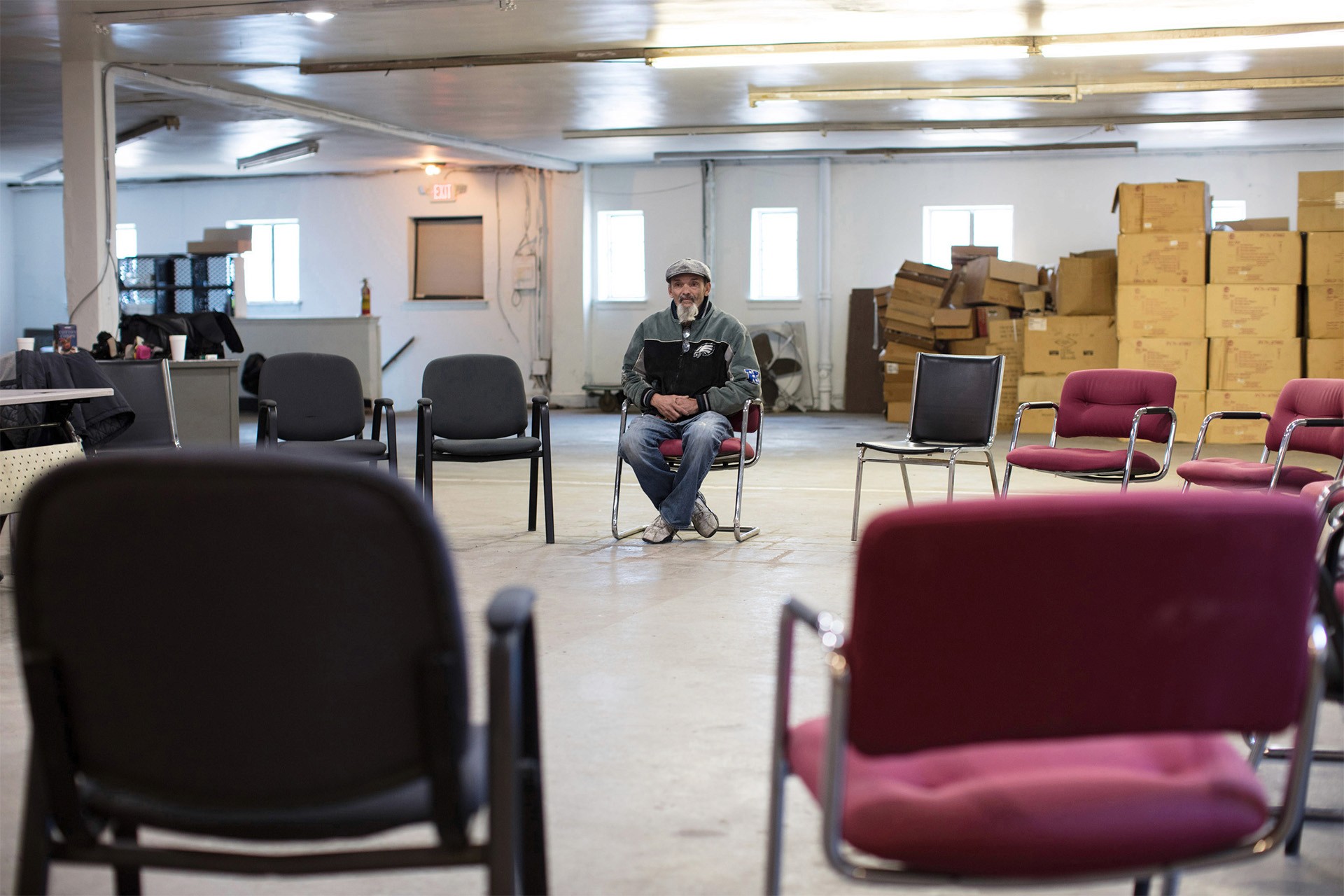
The editorial section of the website features photography from Jeffrey Stockbridge, a renowned photojournalist who has been documenting the lives of those struggling with addiction on Kensington Avenue in Philadelphia for over 10 years.


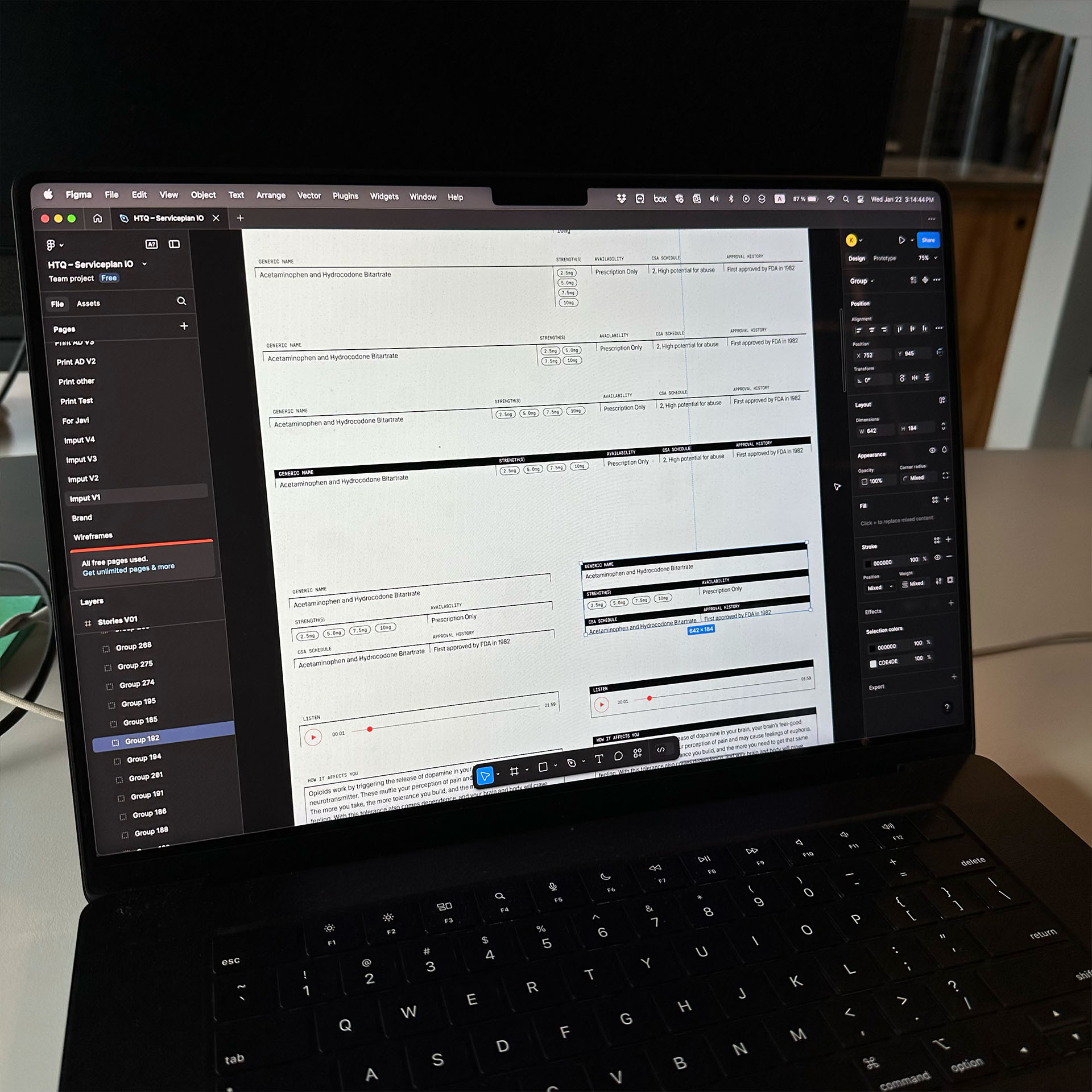
Finally, here's a little sneak peak from behind the scenes :)
Credits
Serviceplan Innovation, Raw Materials, kimera, JOJX, JAMM, DaHouse Audio, Jeffrey Stockbridge, Off Studios, Tom Kubik, Mediaplus Group, Tulom